
What If a Child Could Teach Us More About Predictive Network Operations Than We Think?
By iNOSnet
Sometimes the Simplest Explanation Is the Best One
Artificial Intelligence has become one of the most overused terms in technology.
Every company claims to have it.
Every product promises it.
Every presentation is filled with new acronyms, impressive demonstrations and bold predictions about the future.
Yet if you asked a ten-year-old to explain what intelligence actually means, the answer would probably be much simpler—and surprisingly closer to reality.
Perhaps that is exactly what our industry needs.
Instead of beginning with algorithms, machine learning models or neural networks, let’s begin with something almost everyone understands.
A LEGO city.
Imagine a Huge LEGO City
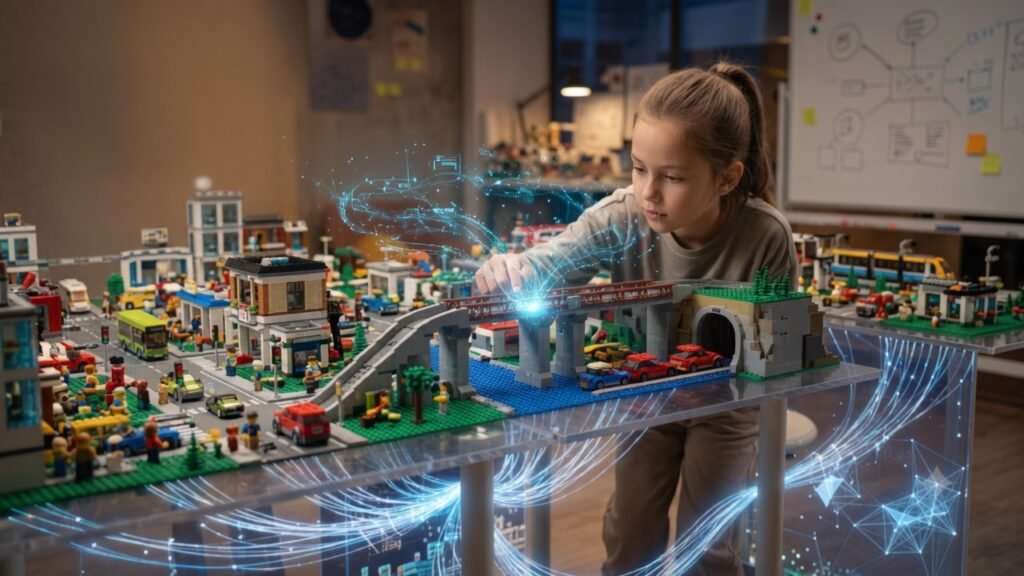
Picture an enormous LEGO city.
It has roads, bridges, traffic lights, hospitals, schools, offices and thousands of tiny people moving through it every day.
Everything depends on the city working together.
Now imagine that you are responsible for keeping the city running safely.
Most adults would immediately think about installing cameras, alarms, sensors and dashboards.
They would monitor every bridge.
Every road.
Every traffic light.
If something failed, an alarm would sound and someone would rush to fix it.
That is how many organisations still manage their network operations today.
They monitor everything.
Then they react.
What If the City Could Warn You First?
Now imagine something different.
A small, intelligent guardian quietly watches over the entire city.
It does not control the traffic.
It does not replace the engineers.
It simply understands what is happening.
It notices tiny cracks appearing in a bridge before anyone else sees them.
It recognises that traffic is building on several roads in a way that usually leads to congestion.
It realises that a tunnel is becoming unstable long before anyone is trapped inside.
Then it calmly says:
“Repair this bridge today.”
“Send someone to Road 17.”
“If nothing changes, traffic across the city will stop within the next hour.”
Nothing has failed.
Nobody is panicking.
There are no emergency vehicles.
There is simply enough intelligence to act before disruption occurs.
That is the difference between monitoring and Operational Intelligence.
That Guardian Is KAATHAM
The LEGO city may be imaginary, but the challenge is very real.
Today’s organisations depend on complex digital infrastructure that includes:
- Enterprise networks
- Telecommunications platforms
- Cloud environments
- Data centres
- Financial systems
- Healthcare platforms
- Critical national infrastructure
Every second, these environments generate millions of telemetry events. Most organisations already collect this information. The challenge is understanding what it means.
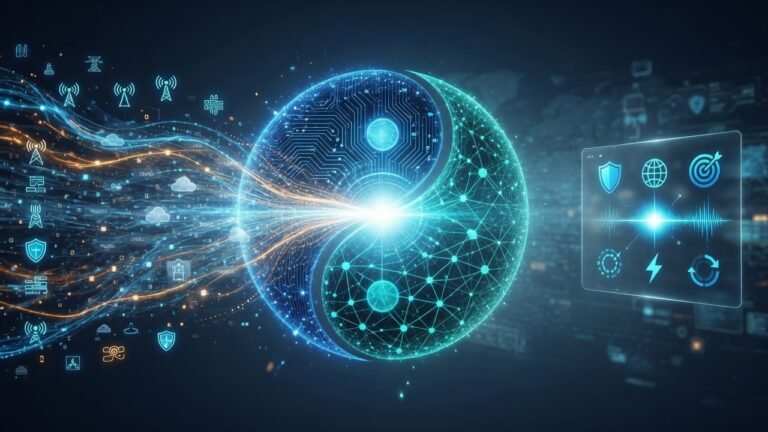
The KAATHAM Intelligence Engine was built to solve exactly that problem.
It is not another dashboard.
It is not another monitoring platform.
It is not another AI chatbot producing impressive-looking answers.
It is an Operational Intelligence Platform that helps organisations recognise risk before customers experience disruption.
From Data to Decisions
Traditional monitoring platforms tell engineers that something has happened. Operational Intelligence explains what is happening, why it matters and what should happen next.
Instead of overwhelming operations teams with thousands of disconnected alerts, KAATHAM continuously analyses:
- Network telemetry
- Service dependencies
- Operational context
- Configuration changes
- Historical incidents
- Topology relationships
- Performance trends
By connecting these signals, KAATHAM transforms fragmented operational data into clear, actionable intelligence.
Rather than asking engineers to investigate hundreds of alerts, it helps them focus on the issues that genuinely require attention.
Intelligence Should Always Have a Purpose
One of the biggest misconceptions surrounding Artificial Intelligence is that more AI automatically produces better outcomes.
Experience suggests otherwise. Technology only creates value when it helps people make better decisions.
That is why KAATHAM combines advanced capabilities only where they provide measurable operational benefit, including:
- Expert engineering knowledge
- Deterministic knowledge graphs
- Machine learning
- Anomaly detection
- Predictive analytics
The objective is not to impress people with Artificial Intelligence.
The objective is to reduce downtime, minimise operational complexity, improve resilience and increase confidence in every operational decision.
The Best Technology Is Almost Invisible
Children rarely admire traffic lights because they are complicated. They admire them because they keep everyone moving safely. The same principle applies to intelligent infrastructure. The most valuable technology is often the technology people never notice. It quietly prevents problems before they become emergencies.
It allows engineers to spend less time firefighting and more time improving the services that customers depend on every day. That is what Predictive Network Operations should achieve.
Perhaps Children Understand Intelligence Better Than Adults
Children do not associate intelligence with complicated terminology. To them, being smart simply means helping people before they need help. Perhaps that is the simplest definition of Operational Intelligence. That is exactly why KAATHAM was created.
Not to replace engineers. Not to replace experience.
But to become the trusted intelligence layer behind modern Network Operations, helping organisations move from reactive monitoring to proactive decision-making.
Because the future is not about collecting more operational data. It is about understanding the signals that matter before disruption occurs.
That is the promise of the KAATHAM Intelligence Engine.
About iNOSnet
iNOSnet is redefining enterprise Network Operations through Operational Intelligence. Powered by the KAATHAM Intelligence Engine, our Intelligent Network Operations Platform transforms operational data into trusted, actionable intelligence—helping organisations anticipate problems, improve resilience and make faster, more informed business decisions.
See. Predict. Act. Before Your Network Fails.